Strategy. Governance. Execution.Strateji. Yönetişim. İcra.

Turning technology governance into measurable business performance Teknoloji yönetişimini ölçülebilir iş performansına dönüştürüyoruz

We help boards and leadership teams turn technology strategy, AI governance, risk and transformation priorities into clear decisions, stronger operating models and measurable outcomes. Yönetim kurullarının ve liderlik ekiplerinin teknoloji stratejisini, yapay zeka yönetişimini, riski ve dönüşüm önceliklerini net kararlara, güçlü işletim modellerine ve ölçülebilir sonuçlara dönüştürmesine yardımcı oluyoruz.

100+
Global projects deliveredTamamlanan global proje
55+
Client partnershipsMüşteri iş ortaklığı
350+
Workshops, audits & assessmentsAtölye, denetim ve değerlendirme
90%
Client satisfactionMüşteri memnuniyeti
Strategy to execution.Stratejiden icraya. One integrated transformation agenda.Tek entegre dönüşüm gündemi.
Board to frontline.Kuruldan sahaya. Clear governance, ownership and delivery.Net yönetişim, sahiplik ve teslimat.
Regional reach.Bölgesel erişim. Türkiye, Azerbaijan, the GCC and Central Asia.Türkiye, Azerbaycan, Körfez ve Orta Asya.
MEASURABLE VALUE STRATEGY AI EXECUTION GOVERNANCE RISK DECISIONS → OUTCOMES
Technology Value SystemTeknoloji Değer Sistemi

Integrated transformationEntegre dönüşüm

Strategy, governance, risk, data and delivery aligned in one system. Strateji, yönetişim, risk, veri ve teslimat tek sistemde hizalanır.

Decision clarityKarar netliği

Clear accountability, priorities and executive‑level decision mechanisms. Net hesap verebilirlik, öncelikler ve üst yönetim düzeyinde karar mekanizmaları.

Measurable impactÖlçülebilir etki

Roadmaps tied to value, maturity uplift, resilience and execution performance. Değere, olgunluk artışına, dayanıklılığa ve icra performansına bağlı yol haritaları.

Our Core CapabilitiesTemel Yetkinliklerimiz

Where strategy meets disciplined executionStratejinin disiplinli icra ile buluştuğu yer

Technology & IT StrategyTeknoloji ve BT Stratejisi

Enterprise technology agendas, target operating models, capability roadmaps, investment priorities and executive governance. Kurumsal teknoloji gündemleri, hedef işletim modelleri, yetkinlik yol haritaları, yatırım öncelikleri ve üst yönetim yönetişimi.

Explore capability →Yetkinliği inceleyin →

AI Governance & Responsible AIYZ Yönetişimi ve Sorumlu Yapay Zeka

AI operating models, policy frameworks, risk classification, oversight committees, literacy programs and ISO/IEC 42001 readiness. YZ işletim modelleri, politika çerçeveleri, risk sınıflandırması, gözetim komiteleri, okuryazarlık programları ve ISO/IEC 42001 hazırlığı.

Explore capability →Yetkinliği inceleyin →

Governance, Risk & ComplianceYönetişim, Risk ve Uyum

COBIT, ISO, IT risk, internal control, audit readiness, cyber governance, regulatory alignment and integrated GRC transformation. COBIT, ISO, BT riski, iç kontrol, denetim hazırlığı, siber yönetişim, regülasyon uyumu ve entegre GRC dönüşümü.

Explore capability →Yetkinliği inceleyin →

Data Governance & Enterprise ArchitectureVeri Yönetişimi ve Kurumsal Mimari

Decision rights, ownership models, data controls, architecture governance, capability maps, standards and transformation blueprints. Karar hakları, sahiplik modelleri, veri kontrolleri, mimari yönetişim, yetkinlik haritaları, standartlar ve dönüşüm planları.

Explore capability →Yetkinliği inceleyin →

PMO, ITSM & Operating ModelPMO, ITSM ve İşletim Modeli

Portfolio governance, delivery cadence, KPI systems, service management, role clarity, capacity models and execution discipline. Portföy yönetişimi, teslimat ritmi, KPI sistemleri, hizmet yönetimi, rol netliği, kapasite modelleri ve icra disiplini.

Explore capability →Yetkinliği inceleyin →

Digital Transformation & Business AgilityDijital Dönüşüm ve İş Çevikliği

Maturity assessments, transformation offices, agile operating models, process redesign, leadership alignment and capability building. Olgunluk değerlendirmeleri, dönüşüm ofisleri, çevik işletim modelleri, süreç tasarımı, liderlik hizalaması ve yetkinlik inşası.

Explore capability →Yetkinliği inceleyin →
How We WorkNasıl Çalışıyoruz

From ambition to a governed execution systemHedeften yönetilen bir icra sistemine

01

DiagnoseTeşhis

Executive interviews, maturity assessments, data analysis, control reviews and stakeholder mapping build the fact base. Üst yönetim görüşmeleri, olgunluk değerlendirmeleri, veri analizi, kontrol incelemeleri ve paydaş haritalaması ile olgusal zemin kurulur.

02

DesignTasarım

Target model defined: governance, roles, decision rights, capabilities, processes, metrics and a prioritized roadmap. Hedef model tanımlanır: yönetişim, roller, karar hakları, yetkinlikler, süreçler, metrikler ve önceliklendirilmiş yol haritası.

03

MobilizeHarekete Geçirme

Design translated into implementation waves, PMO cadence, leadership routines, training and measurable delivery. Tasarım uygulama dalgalarına, PMO ritmine, liderlik rutinlerine, eğitime ve ölçülebilir teslimata dönüştürülür.

04

SustainSürdürme

Performance management, continuous improvement, audit readiness and capability transfer embedded for independence. Performans yönetimi, sürekli iyileştirme, denetim hazırlığı ve yetkinlik aktarımı bağımsızlık için kuruma yerleştirilir.

Selected Transformation ThemesSeçili Dönüşüm Temaları

Complex challenges, structured outcomesKarmaşık sorunlar, yapılandırılmış sonuçlar

Financial ServicesFinansal Hizmetler

Technology governance and ITSM transformationTeknoloji yönetişimi ve ITSM dönüşümü

Enterprise maturity assessment, target governance model, COBIT and ITSM roadmap, committee design, role clarity and KPI architecture. Kurumsal olgunluk değerlendirmesi, hedef yönetişim modeli, COBIT ve ITSM yol haritası, komite tasarımı, rol netliği ve KPI mimarisi.

Governance maturity upliftYönetişim olgunluk artışı 2.1 → 3.4
COBITITSMOperating Model
Industrial GroupSanayi Grubu

Integrated GRC transformation across multiple companiesÇoklu şirkette entegre GRC dönüşümü

Risk and control model, policy architecture, information security governance, business continuity and audit readiness. Risk ve kontrol modeli, politika mimarisi, bilgi güvenliği yönetişimi, iş sürekliliği ve denetim hazırlığı.

Group companies unified under one frameworkTek çerçevede birleşen grup şirketi 6
GRCISOResilience
Technology & TelecomTeknoloji ve Telekom

Process maturity, AI governance and execution disciplineSüreç olgunluğu, YZ yönetişimi ve icra disiplini

Process assessment, governance redesign, AI oversight model, performance routines and transformation office enablement. Süreç değerlendirmesi, yönetişim tasarımı, YZ gözetim modeli, performans rutinleri ve dönüşüm ofisi kurulumu.

AI control families mapped & ownedHaritalanan ve sahiplenilen YZ kontrol ailesi 20
AI GovernanceProcessPMO
BankingBankacılık

Regulatory-aligned technology governance for a mid-size bankOrta ölçekli bankada regülasyon uyumlu teknoloji yönetişimi

Governance model aligned with BDDK expectations, committee structures, control framework, IT risk register and audit-ready documentation.BDDK beklentileriyle hizalı yönetişim modeli, komite yapıları, kontrol çerçevesi, BT risk kaydı ve denetime hazır dokümantasyon.

Audit findings closed within one cycleTek döngüde kapatılan denetim bulguları 100%
BankingRegulationIT Risk
Energy DistributionEnerji Dağıtımı

Technology maturity assessment and transformation roadmapTeknoloji olgunluk değerlendirmesi ve dönüşüm yol haritası

Enterprise-wide maturity baseline, gap analysis against target model, prioritized initiative portfolio and executive alignment sessions.Kurum genelinde olgunluk taban çizgisi, hedef modele göre boşluk analizi, önceliklendirilmiş girişim portföyü ve üst yönetim hizalama oturumları.

Board-approved roadmap inKurul onaylı yol haritası 12 hafta
MaturityRoadmapEnergy
Food & Consumer GroupGıda ve Tüketici Grubu

OKR-based performance management across business unitsİş birimleri genelinde OKR tabanlı performans yönetimi

Group-level objective architecture, cascading OKR design, quarterly rhythm, leadership routines and performance dialogue structure.Grup seviyesinde hedef mimarisi, kademeli OKR tasarımı, çeyreklik ritim, liderlik rutinleri ve performans diyalog yapısı.

Business units on one OKR systemTek OKR sisteminde birleşen iş birimi 8
OKRPerformanceOperating Model
Public SectorKamu Sektörü

Data-driven performance management for a government agencyKamu kurumu için veri odaklı performans yönetimi

KPI architecture tied to strategic objectives, automated reporting, departmental scorecards and evidence-based decision routines.Stratejik hedeflere bağlı KPI mimarisi, otomatik raporlama, birim karneleri ve kanıta dayalı karar rutinleri.

KPIs defined and automatedTanımlanan ve otomatikleşen KPI 60+
Public SectorKPIReporting
Pharmacy Retail — EuropeEczacılık Perakendesi — Avrupa

Data strategy within a group-wide GRC transformationGrup çapında GRC dönüşümünde veri stratejisi

Data governance model, ownership and stewardship structure, privacy-compliant data flows and insight-ready reporting foundation.Veri yönetişim modeli, sahiplik ve veri sorumluluğu yapısı, gizlilik uyumlu veri akışları ve içgörüye hazır raporlama zemini.

Data domains with named ownersSahibi atanan veri alanı 12
DataGRCPrivacy
Aviation & HoldingHavacılık ve Holding

IT operating model redesign after rapid group growthHızlı grup büyümesi sonrası BT işletim modeli tasarımı

Target operating model, decision rights, shared-service design, sourcing choices and governance forums connecting group and subsidiaries.Hedef işletim modeli, karar hakları, ortak hizmet tasarımı, kaynak kullanım tercihleri ve grup ile iştirakleri bağlayan yönetişim forumları.

Roles and decision rights redefinedYeniden tanımlanan rol ve karar hakkı 45+
Operating ModelHoldingSourcing
Digital MarketplaceDijital Pazar Yeri

Scale-up governance and delivery cadence for a technology companyTeknoloji şirketinde ölçeklenme yönetişimi ve teslimat ritmi

Portfolio prioritization, delivery cadence design, KPI system, leadership routines and engineering-business alignment mechanisms.Portföy önceliklendirmesi, teslimat ritmi tasarımı, KPI sistemi, liderlik rutinleri ve mühendislik-iş hizalama mekanizmaları.

Delivery cycle shortenedKısalan teslimat döngüsü 4→2 hafta
Scale-upCadenceKPI
Our Research & Proprietary FrameworksAraştırmalarımız ve Tescilli Çerçevelerimiz

The reference point for AI governance in emerging marketsGelişen pazarlarda YZ yönetişiminin referans noktası

We do not only apply frameworks. We build them — grounded in transformation work across Türkiye, the GCC and Central Asia. Sadece çerçeve uygulamıyoruz; Türkiye, Körfez ve Orta Asya'daki dönüşüm deneyimimizden yola çıkarak çerçevelerin kendisini inşa ediyoruz.

AGSI

AI Governance Signal IndexAI Governance Signal Index

A signal‑based index scoring how institutions govern AI in practice — used to benchmark leading organizations across Türkiye. Kurumların yapay zekayı pratikte nasıl yönettiğini sinyal bazlı puanlayan endeks; Türkiye'nin önde gelen kurumlarını kıyaslamak için kullanılıyor.

AI‑GMM

AI Governance Maturity ModelAI Governance Maturity Model

A six‑domain, five‑level maturity model with 120+ control points — the assessment backbone of our advisory work. 6 alan, 5 seviye ve 120'den fazla kontrol noktasından oluşan olgunluk modeli; danışmanlık çalışmalarımızın değerlendirme omurgası.

Report · 2026Rapor · 2026

Türkiye AI Governance Benchmark ReportTürkiye Yapay Zekâ Yönetişimi Benchmark Raporu

The first independent benchmark of AI governance maturity across major Turkish institutions, scored with the AGSI framework. Türkiye'nin önde gelen kurumlarının YZ yönetişim olgunluğunu AGSI çerçevesiyle puanlayan ilk bağımsız kıyaslama raporu.

Be first to receive the Benchmark ReportBenchmark Raporu yayımlandığında ilk siz alın

Executive summary and institution scores, delivered on publication. No noise, one email. Yönetici özeti ve kurum skorları, yayım gününde e‑postanızda. Tek e‑posta, gereksiz trafik yok.

We only use your email for the report launch. E‑postanız yalnızca rapor lansmanı için kullanılır.
LeadershipLiderlik

Advisory led from the frontEn önden yürütülen danışmanlık

Cantekin Ertekin, Founder & Managing Director of ITGT Consultancy
Cantekin Ertekin
Founder & Managing DirectorKurucu ve Yönetici Direktör

Cantekin advises boards and leadership teams on technology strategy, AI governance and transformation across Türkiye, the GCC and Central Asia. His experience spans KPMG and YCP Solidiance Singapore, and more than 100 transformation engagements across financial services, industry and the public sector. Cantekin, Türkiye, Körfez ve Orta Asya'da yönetim kurullarına ve liderlik ekiplerine teknoloji stratejisi, YZ yönetişimi ve dönüşüm konularında danışmanlık veriyor. KPMG ve YCP Solidiance Singapore deneyiminin yanı sıra finansal hizmetler, sanayi ve kamu sektöründe 100'den fazla dönüşüm projesinde görev aldı.

He is the creator of the AGSI and AI‑GMM frameworks, co‑founder of YZTD — the AI & Technology Association of Türkiye — and a PMP‑certified practitioner. AGSI ve AI‑GMM çerçevelerinin geliştiricisi, Türkiye Yapay Zeka ve Teknoloji Derneği YZTD'nin kurucu ortağı ve PMP sertifikalı bir uygulayıcıdır.

InsightsBlog

Ideas for leaders navigating technology complexityTeknoloji karmaşıklığında yol alan liderler için fikirler

AI GovernanceYZ Yönetişimi

ITIL v5 and AI governance: five questions for the board tableITIL v5 ve yapay zeka yönetişimi: kurul masası için beş soru

Responsibility can be delegated; accountability cannot. What the new PeopleCert whitepaper means for boards. Sorumluluk devredilebilir, hesap verebilirlik devredilemez. PeopleCert whitepaper'ının kurullar için anlamı.

Read insight →Yazıyı okuyun →
RegulationRegülasyon

Five AI governance questions for Turkish companies before COP31COP31 öncesi Türk şirketlerine 5 YZ yönetişim sorusu

ESG models, emission data and AI accountability — what regulators and investors will ask in Antalya. ESG modelleri, emisyon verisi ve YZ hesap verebilirliği: Antalya'da düzenleyiciler ve yatırımcılar ne soracak?

Read insight →Yazıyı okuyun →
MaturityOlgunluk

How to measure AI maturity — and build the roadmapYapay zeka olgunluğunu nasıl ölçersiniz, yol haritası nasıl kurulur?

Twenty control families, an adoption curve, and why global templates fail in emerging markets. Yirmi kontrol ailesi, benimseme eğrisi ve global şablonların gelişen pazarlarda neden çalışmadığı.

Read insight →Yazıyı okuyun →
All insights →Tüm yazılar →
Free AssessmentÜcretsiz Analiz

Where does your organization stand on AI governance?Kurumunuz YZ yönetişiminde nerede duruyor?

Twenty questions, ten minutes, and a board‑ready executive summary of your AI governance maturity. Yirmi soru, on dakika ve doğrudan yönetim kuruluna sunulabilir bir YZ yönetişim olgunluk özeti.

Start the DiagnosticAnalizi Başlatın
Free · No signup required · Board‑ready output Ücretsiz · Kayıt gerektirmez · Kurula sunulabilir çıktı
Let's move from complexity to clarityKarmaşıklıktan netliğe geçelim

Build a technology governance system that performsPerformans üreten bir teknoloji yönetişim sistemi kurun

Bring us your strategic priority, transformation challenge or governance question. We will frame the agenda and define the next move. Stratejik önceliğinizi, dönüşüm sorununuzu veya yönetişim sorunuzu getirin; gündemi birlikte çerçeveleyelim ve bir sonraki adımı tanımlayalım.

Prefer email? Write to us directly and we will respond within one business day. E‑postayı mı tercih edersiniz? Doğrudan yazın, bir iş günü içinde dönüş yapalım.

AI GovernanceYZ Yönetişimi

ITIL v5 and AI Governance: Why PeopleCert's New Whitepaper Belongs on Every Board TableITIL v5 ve Yapay Zeka Yönetişimi: PeopleCert'in Yeni Whitepaper'ı Neden Her Yönetim Kurulunun Masasında Olmalı?

PeopleCert's new ITIL AI Governance whitepaper speaks directly to boards, and it underlines one point: AI governance is not an IT topic — it is a corporate governance topic.PeopleCert'in yayımladığı ITIL AI Governance whitepaper'ı yönetim kurullarını doğrudan ilgilendiriyor ve bir konunun altını çiziyor: yapay zeka yönetişimi bir IT konusu değil, bir kurumsal yönetim konusudur.

Responsibility can be delegated; accountability cannotSorumluluk devredilebilir, hesap verebilirlik devredilemez

The oldest principle of corporate governance has taken on new meaning in the AI era. You can delegate a decision to an algorithm; you cannot delegate accountability for it.Kurumsal yönetimin en eski ilkesi yapay zeka çağında yeni bir anlam kazandı. Bir kararı algoritmaya devredebilirsiniz; o kararın hesabını devredemezsiniz.

The whitepaper's decision-authority perspective makes this clear: if your employees' decisions are being steered by AI and there is no audit trail behind those decisions, your organization is producing indefensible decisions. "The model suggested it" is not a defense in court, before a regulator, or at a general assembly.Whitepaper'ın karar yetkisi perspektifi bunu net biçimde ortaya koyuyor: çalışanlarınızın kararları yapay zeka tarafından yönlendiriliyorsa ve bu kararların denetim izi yoksa, kurumunuz savunulamaz kararlar üretiyor demektir. "Model öyle önerdi" ifadesi ne bir mahkemede ne bir düzenleyici incelemesinde ne de bir genel kurulda savunma sayılır.

Not knowing where AI is used across the enterprise is becoming as unacceptable as not knowing which banks the company worked with a decade ago. The difference: you could ask the CFO about the banks; in most organizations, nobody fully knows where AI is being used.Yapay zekanın kurum genelinde nerede kullanıldığını bilmemek, on yıl önce şirketin hangi bankalarla çalıştığını bilmemek kadar kabul edilemez hale geliyor. Fark şu ki bankaları CFO'ya sorabilirsiniz; yapay zeka kullanımını çoğu kurumda kimse tam olarak bilmiyor.

Is there an AI line in your risk register?Risk kaydınızda yapay zeka satırı var mı?

Here is a simple test. Open your enterprise risk register and search for "artificial intelligence."Basit bir test önerimiz var. Kurumunuzun kurumsal risk kaydını açın ve "yapay zeka" kelimesini aratın.

Cyber security is there, data breaches are there, supply chain is there; but marketing running customer segmentation through a chatbot, legal feeding contract summaries to AI, HR using a CV-screening tool — none of it appears on any risk line. The whitepaper's authors call this the "head in the sand" approach and state plainly that it is no longer enough.Siber güvenlik vardır, veri ihlali vardır, tedarik zinciri vardır; ama pazarlama ekibinin müşteri segmentasyonunu chatbot'a yaptırması, hukuk ekibinin sözleşme özetlerini yapay zekaya okutması, İK'nın CV eleme aracı kullanması hiçbir risk satırında görünmez. Whitepaper'ın yazarları bu duruma "başını kuma gömme yaklaşımı" diyor ve artık yeterli olmadığını açıkça söylüyor.

Invisible risk cannot be managed. Unmanaged risk sooner or later lands on the balance sheet: a data-protection fine, a discrimination lawsuit, a reputation crisis — or, most quietly, negative ROI that nobody notices because nobody measures it.Görünmeyen risk yönetilemez. Yönetilmeyen risk ise er ya da geç bilançoya yazılır: bir KVKK cezası, bir ayrımcılık davası, bir itibar krizi veya en sessizi, hiç kimsenin ölçmediği için fark edilmeyen negatif yatırım getirisi olarak.

Why the audit logic is collapsingDenetim mantığı neden çöküyor?

Boards draw assurance from the audit cycle: internal audit reviews once a year, external audit confirms if needed, the committee reads the report. That logic was designed for static systems.Yönetim kurulları güvenceyi denetim döngüsünden alır: yılda bir iç denetim bakar, gerekiyorsa bağımsız denetim onaylar, komite raporu okur. Bu mantık statik sistemler için kurgulandı.

AI is not static. The whitepaper's sharpest finding: an AI system that is compliant today can become non-compliant within minutes as data and behavior change. An annual audit takes a photograph; AI flows like a film. You cannot audit a film with a photograph. The board's question should not be "did AI come out clean in last year's audit" but "do we have a mechanism that continuously monitors our AI systems."Yapay zeka ise statik değil. Whitepaper'ın en sert tespiti bu: bugün uyumlu olan bir AI sistemi, veri ve davranış değiştikçe dakikalar içinde uyumsuzlaşabilir. Yıllık denetim fotoğraf çeker; yapay zeka ise film gibi akar. Fotoğrafla filmi denetleyemezsiniz. Kurulun sorması gereken soru "geçen yılki denetimde AI temiz çıktı mı" değil, "AI sistemlerimizi sürekli izleyen bir mekanizmamız var mı" olmalı.

Five questions for the board tableKurul masası için beş soru

Translating the whitepaper's framework into board language, here are five questions to put to management at the next meeting:Whitepaper'ın çerçevesini yönetim kurulu diline çevirirsek, bir sonraki toplantıda yönetime yöneltilecek beş soru şunlar:

  1. Do we have a current inventory showing where AI is used across the organization, or are we guessing?Kurumda yapay zekanın nerede kullanıldığını gösteren güncel bir envanterimiz var mı, yoksa tahmin mi ediyoruz?
  2. In AI-assisted decisions, who holds final decision authority, and is it defined in writing?AI destekli kararlarda nihai karar yetkisi kimde ve bu yazılı olarak tanımlı mı?
  3. Are AI risks a separate heading in the enterprise risk register, or lost inside "technology risk"?Yapay zeka riskleri kurumsal risk kaydında ayrı bir başlık mı, yoksa "teknoloji riski" içinde kayıp mı?
  4. Do we have a mechanism continuously monitoring the compliance of our AI systems, or do we rely on the annual audit?AI sistemlerimizin uyumluluğunu sürekli izleyen bir mekanizma mı var, yıllık denetime mi güveniyoruz?
  5. If an AI-driven incident happened tomorrow, who would face the public and the regulator — and with what information?Yarın bir AI kaynaklı olay yaşansa, kamuoyuna ve düzenleyiciye kim, hangi bilgiyle çıkacak?

If you cannot get clear answers to three of these five questions, your organization does not have AI governance. AI usage, however, exists — and it is growing.Bu beş sorudan üçüne net cevap alamıyorsanız, kurumunuzda yapay zeka yönetişimi yok demektir. Yapay zeka kullanımı ise var ve büyüyor.

Before the window closesFırsat penceresi kapanmadan

That was the bad news; here is the good news: you do not need to invent a discipline from scratch. ITIL v5 is, for the first time in its history, designed AI Native, and the whitepaper lays out a concrete path for stress-testing your existing governance structure and adapting it to AI. On top of this, PeopleCert is adding a comprehensive AI Governance publication and certification extension as of June 2026. The framework is ready; what is missing is the board putting it on the agenda.Kötü haberi verdik, iyi haber şu: bu iş için sıfırdan bir disiplin icat etmeniz gerekmiyor. ITIL v5, tarihinde ilk kez AI Native olarak tasarlandı ve whitepaper mevcut yönetişim yapınızı stres testinden geçirip AI'a uyarlamanın somut yolunu çiziyor. PeopleCert bunun üzerine Haziran 2026 itibarıyla kapsamlı bir AI Governance yayını ve sertifikasyon uzantısı da ekliyor. Çerçeve hazır; eksik olan, kurulun bu konuyu gündemine alması.

For boards that move early, this is not a defensive move but a positioning move. The company that can tell its investors, customers and regulator "we govern this" separates itself from the competitor that has not even built an inventory yet.Erken davranan kurullar için bu bir savunma hamlesi değil, konumlanma hamlesi. Yatırımcısına, müşterisine ve düzenleyicisine "biz bu işi yönetiyoruz" diyebilen şirket, aynı pazarda henüz envanter bile çıkarmamış rakibinden ayrışır.

The starting point is always measurement. Set aside ten minutes before your next board meeting; come to the table with a photograph in hand.Başlangıç noktası her zaman ölçümdür. Bir sonraki kurul toplantısından önce on dakikanızı ayırın; masaya elinizde bir fotoğrafla oturun.

Where does your organization stand on AI governance?Kurumunuz YZ yönetişiminde nerede duruyor?

Twenty questions, ten minutes, and a board‑ready executive summary.Yirmi soru, on dakika ve doğrudan yönetim kuruluna sunulabilir bir yönetici özeti.

Start the free DiagnosticÜcretsiz Analizi Başlatın
RegulationRegülasyon

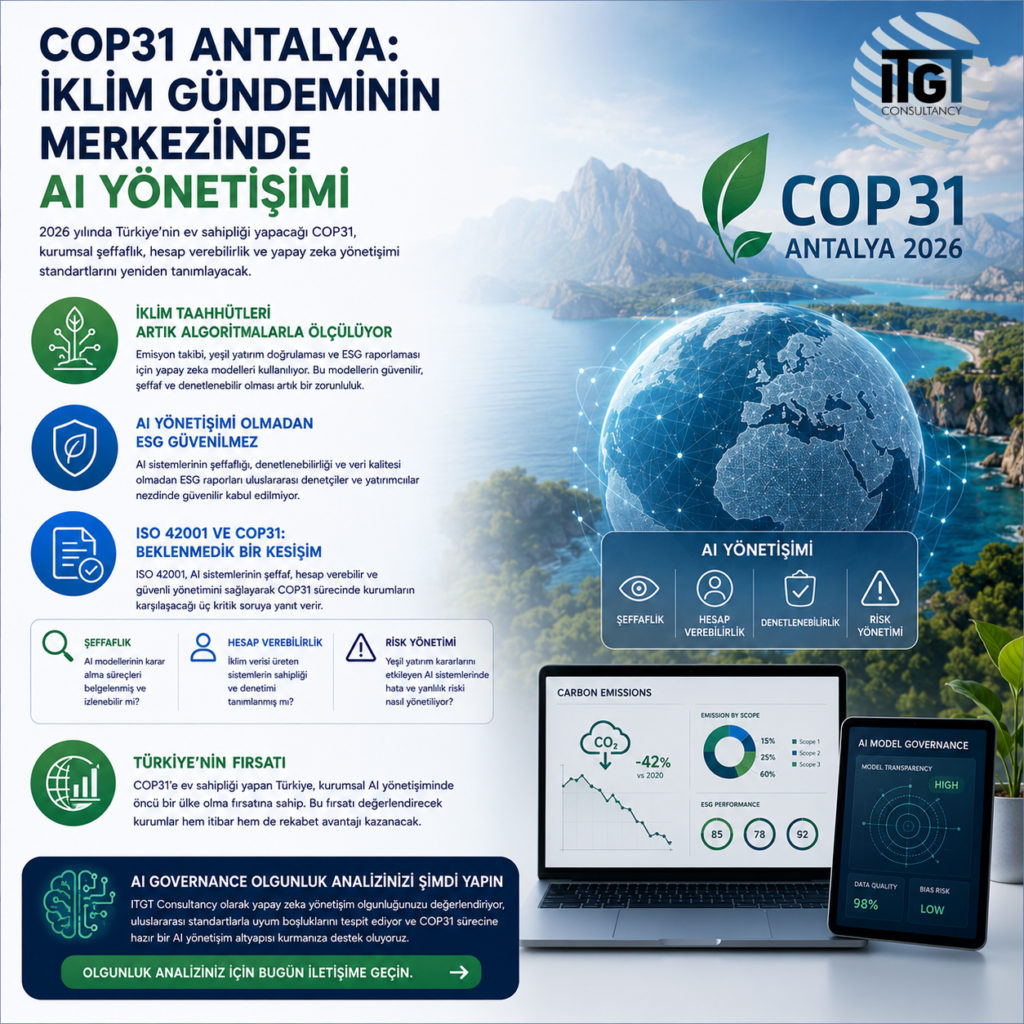
Five AI Governance Questions for Turkish Companies Before COP31COP31 Öncesi Türk Şirketlerine 5 YZ Yönetişim Sorusu

Antalya, November 2026. World leaders, investors and civil society are watching Türkiye. On the COP31 stage, not only governments but corporations will be judged. Your carbon commitments, ESG reports and green investment decisions are under the lens.Antalya, Kasım 2026. Dünya liderleri, yatırımcılar ve sivil toplum kuruluşları Türkiye'ye bakıyor. COP31 sahnesinde yalnızca hükümetler değil, kurumlar da yargılanacak. Karbon taahhütleriniz, ESG raporlarınız, yeşil yatırım kararlarınız mercek altında.

But how many companies have asked: are the AI systems behind these decisions governed? Here are the five critical questions every Turkish company should ask itself before COP31.Ama şu soruyu kaç şirket sordu: bu kararların arkasındaki yapay zeka sistemleri yönetiliyor mu? İşte COP31 öncesi her Türk şirketinin kendine sorması gereken beş kritik soru.

Question 1: Is the model calculating your emissions data transparent?Soru 1: Emisyon verilerinizi hesaplayan model şeffaf mı?

Carbon footprint calculation is no longer done in spreadsheets but in AI-assisted systems. Do you know what data the model runs on, what assumptions it rests on, and when it was last updated?Karbon ayak izi hesaplaması artık Excel tablolarıyla değil, AI destekli sistemlerle yapılıyor. Peki bu modelin hangi veriyle çalıştığını, hangi varsayımlara dayandığını ve ne zaman son güncellendiğini biliyor musunuz?

International auditors now ask not only about the result but about the system that produced it. If you cannot explain the model, you cannot defend the number.Uluslararası denetçiler artık yalnızca sonucu değil, sonuca götüren sistemi soruyor. Modeli açıklayamazsanız, rakamı da savunamazsınız.

Question 2: Who owns the AI decisions in your ESG report?Soru 2: ESG raporunuzdaki AI kararlarının sahibi kim?

Supply-chain emission tracking, energy optimization, green investment scoring — all of these are now partly or fully AI decisions. Has corporate accountability been defined for them?Tedarik zinciri emisyon takibi, enerji tüketim optimizasyonu, yeşil yatırım skorlaması; bunların hepsi artık kısmen veya tamamen AI kararı. Peki bu kararlar için kurumsal hesap verebilirlik tanımlanmış mı?

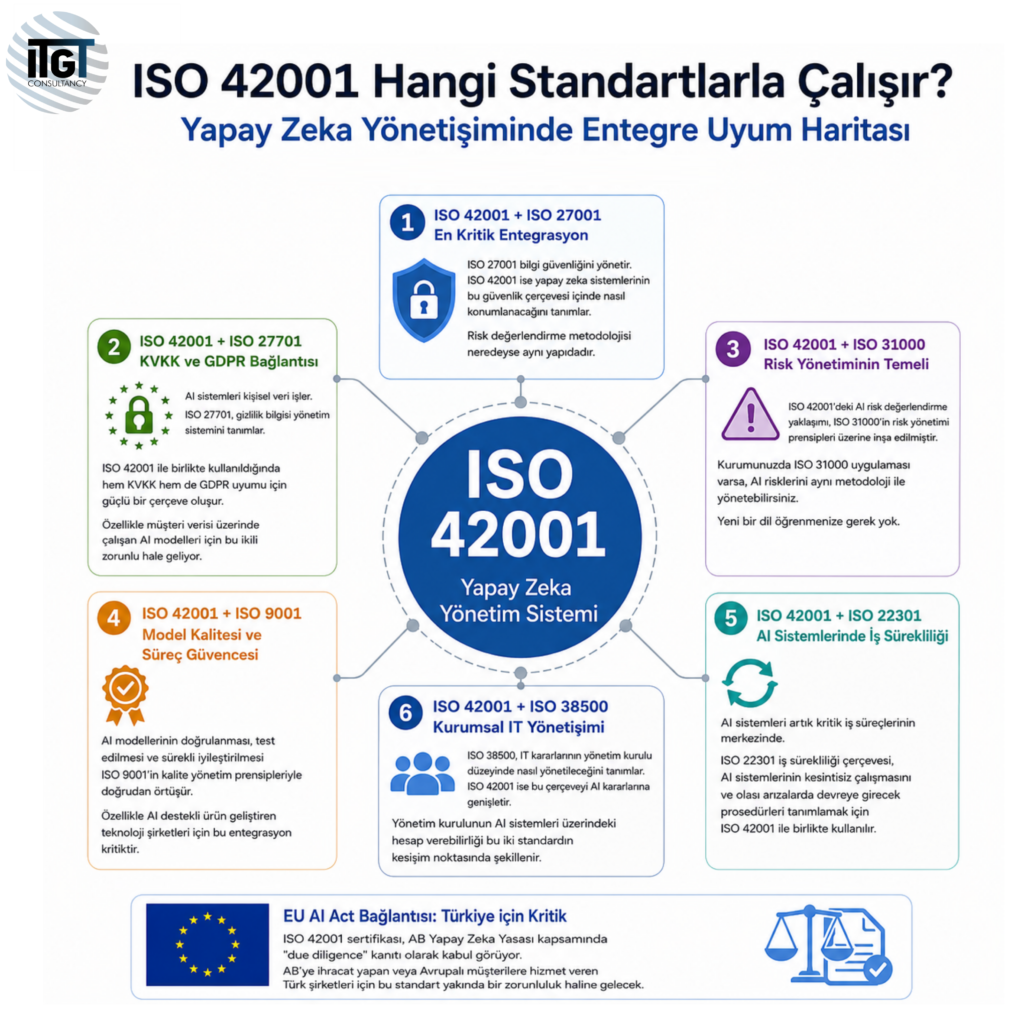
The most important thing ISO 42001 brings to corporate governance is this: a system may make an AI decision, but a human must own the responsibility. Who is that human?ISO 42001'in kurumsal yönetişime getirdiği en önemli yenilik şudur: AI kararı bir sistem verebilir, ama sorumluluğu bir insan üstlenmek zorundadır. Bu insan kim?

Question 3: What do you answer when a foreign investor asks about your AI systems?Soru 3: Yabancı yatırımcınız AI sistemlerinizi sorduğunda ne cevap veriyorsunuz?

Turkish companies exporting to Europe under the EU Green Deal face growing pressure. European partners and investors now ask: "Which system produces your ESG data, and how is that system audited?"AB Yeşil Mutabakatı kapsamında Avrupa'ya ihracat yapan Türk şirketleri giderek artan bir baskıyla karşılaşıyor. Avrupalı ortaklar ve yatırımcılar artık şunu soruyor: "ESG verilerinizi hangi sistemle üretiyorsunuz ve o sistem nasıl denetleniyor?"

"Our consulting firm handles it" is no longer enough. You need corporate AI governance documentation."Danışmanlık firmamız hallediyor" cevabı artık yetmiyor. Kurumsal AI yönetişim belgeniz olması gerekiyor.

Question 4: Has bias risk in your AI system been assessed?Soru 4: AI sisteminizde yanlılık riski değerlendirildi mi?

The AI model you use for climate-risk modeling, green credit scoring or supplier assessment may be producing a systematic error. At small scale the error goes unnoticed; large decisions it affects deeply.İklim riski modellemesinde, yeşil kredi skorlamasında veya tedarikçi değerlendirmesinde kullandığınız AI modeli sistematik bir hata üretiyor olabilir. Bu hata küçük ölçekte fark edilmez, büyük kararları ise derinden etkiler.

After COP31, international standards will expect organizations to manage this risk themselves. Companies that do not run an AI risk assessment today will face serious reputation and compliance risks tomorrow.COP31 sonrasında uluslararası standartlar bu riski kurumların kendi başlarına yönetmesini bekleyecek. Bugün bir AI risk değerlendirmesi yapmayan şirketler yarın ciddi itibar ve uyum riskleriyle karşılaşacak.

Question 5: Where is your AI governance maturity?Soru 5: YZ yönetişim olgunluğunuz nerede?

If you could not answer the four questions above clearly, you are not alone. The vast majority of companies in Türkiye use AI systems but do not govern them. This gap between using and governing will become corporate risk during the COP31 process.Yukarıdaki dört soruya net cevap veremediyseniz yalnız değilsiniz. Türkiye'deki şirketlerin büyük çoğunluğu AI sistemlerini kullanıyor ama yönetmiyor. Kullanmak ile yönetmek arasındaki bu boşluk, COP31 sürecinde kurumsal risk haline gelecek.

AI governance maturity is measured across five dimensions: transparency, accountability, risk management, data quality and human oversight. Knowing where you stand on these dimensions is the first step in deciding where you need to go.YZ yönetişim olgunluğu beş boyutta ölçülür: şeffaflık, hesap verebilirlik, risk yönetimi, veri kalitesi ve insan denetimi. Bu boyutlarda nerede durduğunuzu bilmek, nereye gitmeniz gerektiğini belirlemenin ilk adımıdır.

Less than 12 months remain until COP31 Antalya. At ITGT Consultancy we assess your organization's AI governance maturity across five dimensions, identify your compliance gaps against international standards, and deliver a concrete roadmap.COP31 Antalya'ya 12 aydan az zaman kaldı. ITGT Consultancy olarak kurumunuzun YZ yönetişim olgunluğunu beş boyutta değerlendiriyor, uluslararası standartlarla uyum boşluklarınızı tespit ediyor ve somut bir yol haritası sunuyoruz.

Where does your organization stand on AI governance?Kurumunuz YZ yönetişiminde nerede duruyor?

Twenty questions, ten minutes, and a board‑ready executive summary.Yirmi soru, on dakika ve doğrudan yönetim kuruluna sunulabilir bir yönetici özeti.

Start the free DiagnosticÜcretsiz Analizi Başlatın
MaturityOlgunluk

How Do You Measure AI Maturity? How Do You Build the Roadmap?Yapay Zeka Olgunluğunu Nasıl Ölçersiniz? Yol Haritası Nasıl Kurulur?

You are talking to a CEO. Serious budget went into AI last year. Platforms installed, trainings delivered, a couple of pilots launched. Then the question comes: "Where are we?"Bir CEO ile konuşuyorsunuz. Yapay zekaya geçen yıl ciddi bütçe ayırmış. Platformlar kurulmuş, eğitimler verilmiş, bir iki pilot başlatılmış. Sonra soruyor: "Neredeyiz?"

Nobody can answer clearly.Kimse net cevap veremiyor.

We have witnessed this scene many times — in Türkiye, in the Gulf, in Central Asia. The problem is not technology. The problem is the absence of measurement. If you do not know where you are, you cannot know where you are going.Bu sahneye birçok kez tanıklık ettik. Türkiye'de, Körfez'de, Orta Asya'da. Sorun teknoloji değil. Sorun ölçüm yokluğu. Nerede olduğunuzu bilmiyorsanız, nereye gideceğinizi de bilemezsiniz.

What is AI maturity?Yapay zeka olgunluğu nedir?

Maturity is not the number of software licenses. Nor the count of pilot projects.Olgunluk, yazılım lisansı sayısı değil. Pilot proje adedi de değil.

Maturity is the answer to this question: how safely, how sustainably, how much under control can your organization use AI?Olgunluk şu sorunun cevabı: organizasyonunuz yapay zekayı ne kadar güvenli, ne kadar sürdürülebilir, ne kadar kontrollü kullanabiliyor?

To measure it, we look at two things.Bunu ölçmek için iki şeye bakıyoruz.

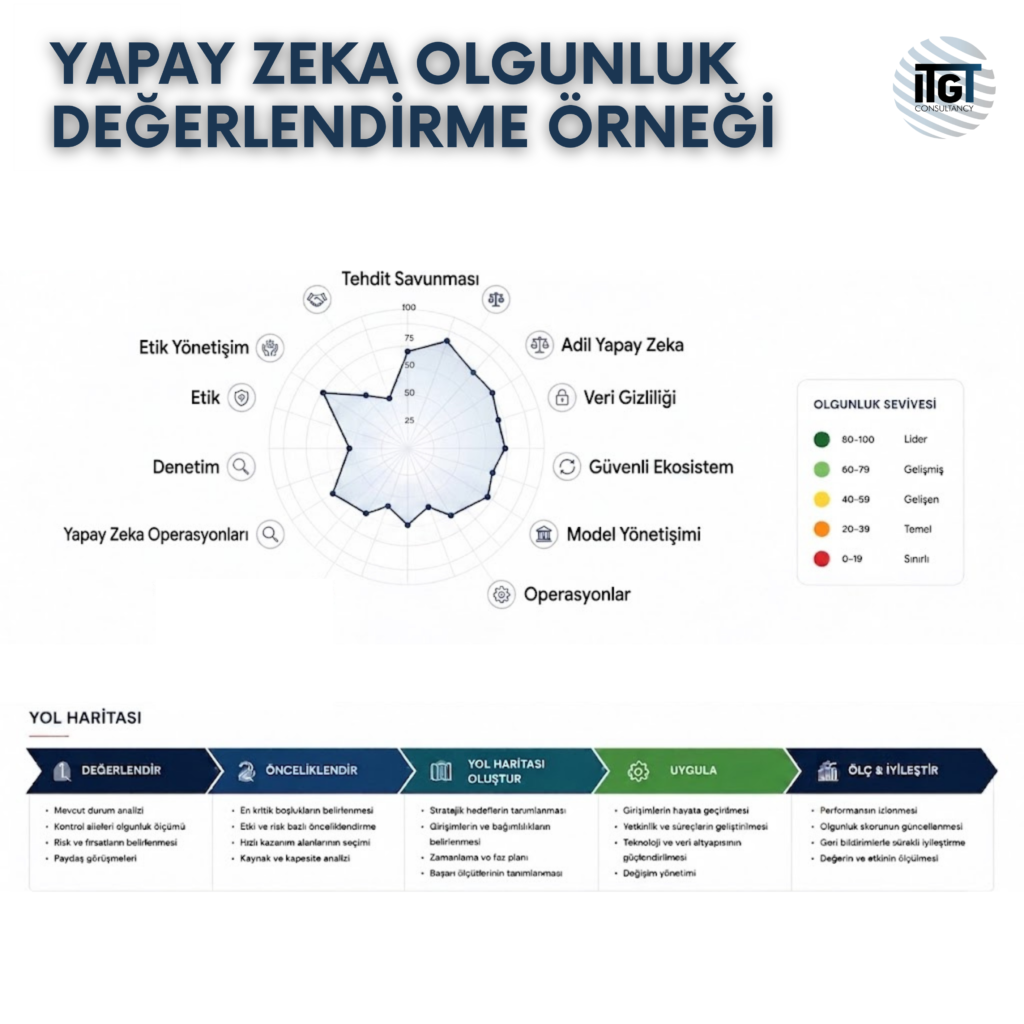
First, control-family maturity. AI governance has 20 distinct control families — from Adversarial Defense to AI Bias Mitigation, from Data Privacy to Human-AI Interaction. Each has its own readiness level. Which exist on paper but do not operate in practice? Which have never been mapped?Birincisi, kontrol ailesi olgunluğu. Yapay zeka yönetişiminde 20 farklı kontrol ailesi var. Adversarial Defense'ten AI Bias Mitigation'a, Veri Gizliliği'nden İnsan-AI Etkileşimi'ne kadar. Her birinin ayrı bir hazırlık seviyesi var. Hangileri kağıt üzerinde var ama pratikte işlemiyor? Hangileri hiç haritalanmamış?

Second, the organizational adoption curve. The technology may be installed. But are employees actually using it? Why is middle management resisting? Are the data walls between business units still standing? The adoption problem often overshadows the technology problem — and most assessments ignore it.İkincisi, organizasyonel benimseme eğrisi. Teknoloji kurulmuş olabilir. Ama çalışanlar gerçekten kullanıyor mu? Orta kademe yöneticiler neden direniyor? İş birimleri arasındaki veri duvarları hâlâ yerinde mi? Benimseme sorunu çoğu zaman teknoloji sorununu gölgede bırakır. Ve çoğu değerlendirme bunu görmezden gelir.

So how do we measure?Peki nasıl ölçüyoruz?

We take a snapshot in a short period scaled to your organization.Kurumunuzun ölçeğine göre kısa bir sürede bir fotoğraf çekiyoruz.

Which teams have started using AI on their own? Are there experiments nobody noticed that actually work? Asking this matters because innovation in organizations usually grows from within, not from the top. Seeing and mapping it is the first step of the assessment.Hangi ekipler yapay zekayı kendi kendine kullanmaya başlamış? Kimsenin fark etmediği ama işe yarayan deneyler var mı? Bu soruyu sormak önemli çünkü organizasyonlarda inovasyon çoğu zaman yukarıdan değil, içeriden büyür. Onu görmek ve haritalamak değerlendirmenin ilk adımı.

We then open the control families one by one, and finally read the findings together with the CFO, the CIO and business-unit leaders. That meeting is critical: the technology team and the business team often assign different meanings to the same data. Without a shared language, no roadmap can be built.Daha sonra kontrol ailelerini teker teker açıyoruz ve en son bulguları CFO, CIO ve iş birimi liderleriyle birlikte okuyoruz. Bu toplantı kritik. Çünkü teknoloji ekibi ile iş ekibi çoğu zaman aynı verilere farklı anlam yüklüyor. Ortak bir dil kurmadan yol haritası kurulamaz.

How is the roadmap built?Yol haritası nasıl kurulur?

The assessment is done. We have a score and a map. Now what?Değerlendirme bitti. Elimizde bir skor var, bir harita var. Şimdi ne yapacağız?

The biggest mistake made here: launching everything at once. That creates chaos, not a roadmap. We prioritize with three questions.Burada yapılan en büyük hata şu: her şeyi aynı anda başlatmak. Bu yol haritası değil, kaos yaratır. Biz üç soruda önceliklendiriyoruz.

First question: which control-family gap creates the biggest risk? In the Gulf, data sovereignty is critical. In Türkiye, BDDK and KVKK compliance apply a different pressure. In Central Asia, operational infrastructure gaps often need to close before governance gaps. Priorities change by sector and geography; global templates do not work here.Birinci soru: hangi kontrol ailesi boşluğu en büyük riski yaratıyor? Körfez'de veri egemenliği meselesi kritik. Türkiye'de BDDK ve KVKK uyumu farklı bir baskı koyuyor. Orta Asya'da operasyonel altyapı boşluklarının çoğu zaman yönetişim boşluklarından önce kapanması gerekiyor. Sektör ve coğrafyaya göre öncelik değişiyor; global şablonlar burada çalışmıyor.

Second question: where is the quick win? Every organization has one area that can produce visible results in 8-12 weeks. Finding it and focusing there earns senior management's trust. Without trust, there is no long-term transformation.İkinci soru: hızlı kazanım nerede? Her organizasyonda 8-12 haftada görünür sonuç üretebilecek bir alan var. Bunu bulmak ve oraya odaklanmak üst yönetimin güvenini kazanıyor. Güven olmadan uzun vadeli dönüşüm olmaz.

Third question: how do we transfer the capability inward? The final step of the roadmap is independence, not dependency — embedding the AI governance model into the organization's own structure, building a system they can sustain without outside consultants. We design for that from day one.Üçüncü soru: kapasiteyi içeriye nasıl aktarıyoruz? Yol haritasının son adımı bağımlılık değil, bağımsızlık. AI Governance modelini kurumun kendi yapısına yerleştirmek, dışarıdan danışman olmadan sürdürebilecekleri bir sistem kurmak. Biz bunu baştan tasarlıyoruz.

What makes the difference in emerging markets?Gelişen pazarlarda fark yaratan ne?

The AI journey of an organization in Türkiye, Azerbaijan, Kazakhstan or the Gulf is not the same as in Western Europe. Organizations here have fewer layers, less process weight. That is an advantage; the speed potential is higher.Türkiye, Azerbaycan, Kazakistan ya da Körfez'deki bir kurumun yapay zeka yolculuğu Batı Avrupa'dakiyle aynı değil. Buradaki organizasyonlar daha az katmanlı, daha az süreç ağırlıklı. Bu bir avantaj; hız potansiyeli daha yüksek.

But the governance gap is also deeper. Data infrastructure is often insufficient. Regulatory pressure is real. And there is frequently no clear role that owns AI — the responsibility gets loaded onto the CFO or the CDO.Ama yönetişim açığı da daha derin. Veri altyapısı genellikle yetersiz. Regülatör baskısı var. Ve çoğu zaman yapay zekayı sahiplenecek net bir rol yok; bu sorumluluk CFO'ya ya da CDO'ya bindirilmiş durumda.

Assessments that ignore this reality end up as local copies of global templates. We learned from more than 100 transformation projects: the right diagnosis always starts from local reality.Bu gerçeği görmeden yapılan değerlendirmeler, global şablonların yerel kopyasından ibaret kalır. Biz 100'ü aşkın dönüşüm projesinden öğrendik: doğru teşhis her zaman yerel gerçeklikten başlar.

Final wordSon söz

Measuring AI maturity is not about producing a score; it is about seeing where to focus. And the roadmap is not a slide deck; it is a system that runs inside the organization — measurable, adaptable. If you are ready to build it, we are ready to talk.Yapay zeka olgunluğunu ölçmek bir skor üretmek için değil, nereye odaklanmanız gerektiğini görmek için. Yol haritası da bir PowerPoint sunumu değil; organizasyonun kendi içinde çalışan, ölçülebilen, adapte olabilen bir sistem. Bunu inşa etmeye hazırsanız, konuşmaya hazırız.

Where does your organization stand on AI governance?Kurumunuz YZ yönetişiminde nerede duruyor?

Twenty questions, ten minutes, and a board‑ready executive summary.Yirmi soru, on dakika ve doğrudan yönetim kuruluna sunulabilir bir yönetici özeti.

Start the free DiagnosticÜcretsiz Analizi Başlatın
CapabilityYetkinlik

Technology & IT StrategyTeknoloji ve BT Stratejisi

Technology creates value only when it is governed as a business agenda. We work with boards and executive teams to define an enterprise technology strategy that is explicit about priorities, investments, and accountability.Teknoloji ancak bir iş gündemi olarak yönetildiğinde değer üretir. Yönetim kurulları ve üst yönetim ekipleriyle birlikte; öncelikleri, yatırımları ve hesap verebilirliği net biçimde tanımlanmış bir kurumsal teknoloji stratejisi kuruyoruz.

What this coversKapsam

Typical work includes enterprise technology agendas, target operating models, capability roadmaps, investment prioritization, sourcing decisions, and the executive governance mechanisms that keep strategy and delivery connected.Tipik çalışma alanları: kurumsal teknoloji gündemleri, hedef işletim modelleri, yetkinlik yol haritaları, yatırım önceliklendirmesi, kaynak kullanım kararları ve stratejiyi icrayla bağlı tutan üst yönetim yönetişim mekanizmaları.

How we workNasıl çalışıyoruz

Every engagement follows our four‑step system — Diagnose, Design, Mobilize, Sustain — so the work ends not with a report, but with an operating capability your organization owns.Her çalışma dört adımlı sistemimizi izler: Teşhis, Tasarım, Harekete Geçirme, Sürdürme. İş bir raporla değil, kurumunuzun sahiplendiği çalışan bir yetkinlikle biter.

Discuss this capabilityBu yetkinliği konuşalım

Bring your context; we will frame the agenda and define the next move.Bağlamınızı getirin; gündemi birlikte çerçeveleyelim ve bir sonraki adımı tanımlayalım.

Talk to an AdvisorDanışmanla Görüşün
CapabilityYetkinlik

AI Governance & Responsible AIYZ Yönetişimi ve Sorumlu Yapay Zeka

AI is already making decisions inside your organization — the question is whether those decisions are governed. We design AI operating models that make usage visible, accountability explicit, and compliance continuous.Yapay zeka kurumunuzun içinde zaten karar veriyor; soru, bu kararların yönetilip yönetilmediği. Kullanımı görünür, hesap verebilirliği tanımlı ve uyumluluğu sürekli kılan YZ işletim modelleri tasarlıyoruz.

What this coversKapsam

Typical work includes AI operating models, policy frameworks, risk classification, oversight committees, AI literacy programs, ISO/IEC 42001 readiness, and maturity assessment with our proprietary AI‑GMM framework.Tipik çalışma alanları: YZ işletim modelleri, politika çerçeveleri, risk sınıflandırması, gözetim komiteleri, YZ okuryazarlık programları, ISO/IEC 42001 hazırlığı ve tescilli AI‑GMM çerçevemizle olgunluk değerlendirmesi.

How we workNasıl çalışıyoruz

Every engagement follows our four‑step system — Diagnose, Design, Mobilize, Sustain — so the work ends not with a report, but with an operating capability your organization owns.Her çalışma dört adımlı sistemimizi izler: Teşhis, Tasarım, Harekete Geçirme, Sürdürme. İş bir raporla değil, kurumunuzun sahiplendiği çalışan bir yetkinlikle biter.

Where does your organization stand?Kurumunuz nerede duruyor?

Twenty questions, ten minutes, a board‑ready summary of your AI governance maturity.Yirmi soru, on dakika, kurula sunulabilir bir YZ yönetişim olgunluk özeti.

Start the free DiagnosticÜcretsiz Analizi Başlatın

Discuss this capabilityBu yetkinliği konuşalım

Bring your context; we will frame the agenda and define the next move.Bağlamınızı getirin; gündemi birlikte çerçeveleyelim ve bir sonraki adımı tanımlayalım.

Talk to an AdvisorDanışmanla Görüşün
CapabilityYetkinlik

Technology Governance, Risk & ComplianceYönetişim, Risk ve Uyum

Governance on paper is not governance. We build integrated GRC structures where controls actually operate, risks are owned, and audit readiness is a byproduct of daily work rather than an annual scramble.Kağıt üzerindeki yönetişim, yönetişim değildir. Kontrollerin gerçekten işlediği, risklerin sahiplenildiği ve denetim hazırlığının yıllık bir telaş değil günlük işin doğal çıktısı olduğu entegre GRC yapıları kuruyoruz.

What this coversKapsam

Typical work includes COBIT and ISO implementations, IT risk and internal control models, cyber governance, regulatory alignment across KVKK, BDDK and EU frameworks, and integrated GRC transformation programs.Tipik çalışma alanları: COBIT ve ISO uygulamaları, BT riski ve iç kontrol modelleri, siber yönetişim; KVKK, BDDK ve AB çerçeveleriyle regülasyon uyumu ve entegre GRC dönüşüm programları.

How we workNasıl çalışıyoruz

Every engagement follows our four‑step system — Diagnose, Design, Mobilize, Sustain — so the work ends not with a report, but with an operating capability your organization owns.Her çalışma dört adımlı sistemimizi izler: Teşhis, Tasarım, Harekete Geçirme, Sürdürme. İş bir raporla değil, kurumunuzun sahiplendiği çalışan bir yetkinlikle biter.

Discuss this capabilityBu yetkinliği konuşalım

Bring your context; we will frame the agenda and define the next move.Bağlamınızı getirin; gündemi birlikte çerçeveleyelim ve bir sonraki adımı tanımlayalım.

Talk to an AdvisorDanışmanla Görüşün
CapabilityYetkinlik

Data Governance & Enterprise ArchitectureVeri Yönetişimi ve Kurumsal Mimari

Data creates value only when ownership and decision rights are clear. We establish governance structures and architecture standards that turn scattered data assets into a managed, decision‑ready foundation.Veri ancak sahiplik ve karar hakları netse değer üretir. Dağınık veri varlıklarını yönetilen ve karar almaya hazır bir zemine dönüştüren yönetişim yapıları ve mimari standartları kuruyoruz.

What this coversKapsam

Typical work includes decision rights and ownership models, data controls and quality frameworks, architecture governance, capability maps, standards, and transformation blueprints aligned with business strategy.Tipik çalışma alanları: karar hakları ve sahiplik modelleri, veri kontrolleri ve kalite çerçeveleri, mimari yönetişim, yetkinlik haritaları, standartlar ve iş stratejisiyle hizalı dönüşüm planları.

How we workNasıl çalışıyoruz

Every engagement follows our four‑step system — Diagnose, Design, Mobilize, Sustain — so the work ends not with a report, but with an operating capability your organization owns.Her çalışma dört adımlı sistemimizi izler: Teşhis, Tasarım, Harekete Geçirme, Sürdürme. İş bir raporla değil, kurumunuzun sahiplendiği çalışan bir yetkinlikle biter.

Discuss this capabilityBu yetkinliği konuşalım

Bring your context; we will frame the agenda and define the next move.Bağlamınızı getirin; gündemi birlikte çerçeveleyelim ve bir sonraki adımı tanımlayalım.

Talk to an AdvisorDanışmanla Görüşün
CapabilityYetkinlik

PMO, ITSM & Operating ModelPMO, ITSM ve İşletim Modeli

Execution discipline is an operating model choice, not a personality trait. We design portfolio governance, delivery cadence, and service management structures that make performance visible and improvement continuous.İcra disiplini bir karakter özelliği değil, bir işletim modeli tercihidir. Performansı görünür ve iyileştirmeyi sürekli kılan portföy yönetişimi, teslimat ritmi ve hizmet yönetimi yapıları tasarlıyoruz.

What this coversKapsam

Typical work includes portfolio governance, PMO design, delivery cadence and KPI systems, ITSM and service management, role clarity, capacity models, and execution routines from board level to delivery teams.Tipik çalışma alanları: portföy yönetişimi, PMO tasarımı, teslimat ritmi ve KPI sistemleri, ITSM ve hizmet yönetimi, rol netliği, kapasite modelleri ve kuruldan teslimat ekiplerine uzanan icra rutinleri.

How we workNasıl çalışıyoruz

Every engagement follows our four‑step system — Diagnose, Design, Mobilize, Sustain — so the work ends not with a report, but with an operating capability your organization owns.Her çalışma dört adımlı sistemimizi izler: Teşhis, Tasarım, Harekete Geçirme, Sürdürme. İş bir raporla değil, kurumunuzun sahiplendiği çalışan bir yetkinlikle biter.

Discuss this capabilityBu yetkinliği konuşalım

Bring your context; we will frame the agenda and define the next move.Bağlamınızı getirin; gündemi birlikte çerçeveleyelim ve bir sonraki adımı tanımlayalım.

Talk to an AdvisorDanışmanla Görüşün
CapabilityYetkinlik

Digital Transformation & Business AgilityDijital Dönüşüm ve İş Çevikliği

Transformation fails when it is run as a project instead of built as a capability. We help organizations design transformation offices, agile operating models, and leadership routines that outlast the program itself.Dönüşüm, bir yetkinlik olarak inşa edilmek yerine proje gibi yürütüldüğünde başarısız olur. Programın kendisinden daha uzun yaşayacak dönüşüm ofisleri, çevik işletim modelleri ve liderlik rutinleri tasarlamanıza yardımcı oluyoruz.

What this coversKapsam

Typical work includes maturity assessments, transformation office setup, agile operating models, process redesign, leadership alignment, and capability building that transfers ownership to your own teams.Tipik çalışma alanları: olgunluk değerlendirmeleri, dönüşüm ofisi kurulumu, çevik işletim modelleri, süreç tasarımı, liderlik hizalaması ve sahipliği kendi ekiplerinize aktaran yetkinlik inşası.

How we workNasıl çalışıyoruz

Every engagement follows our four‑step system — Diagnose, Design, Mobilize, Sustain — so the work ends not with a report, but with an operating capability your organization owns.Her çalışma dört adımlı sistemimizi izler: Teşhis, Tasarım, Harekete Geçirme, Sürdürme. İş bir raporla değil, kurumunuzun sahiplendiği çalışan bir yetkinlikle biter.

Discuss this capabilityBu yetkinliği konuşalım

Bring your context; we will frame the agenda and define the next move.Bağlamınızı getirin; gündemi birlikte çerçeveleyelim ve bir sonraki adımı tanımlayalım.

Talk to an AdvisorDanışmanla Görüşün
PerspectivePerspektif

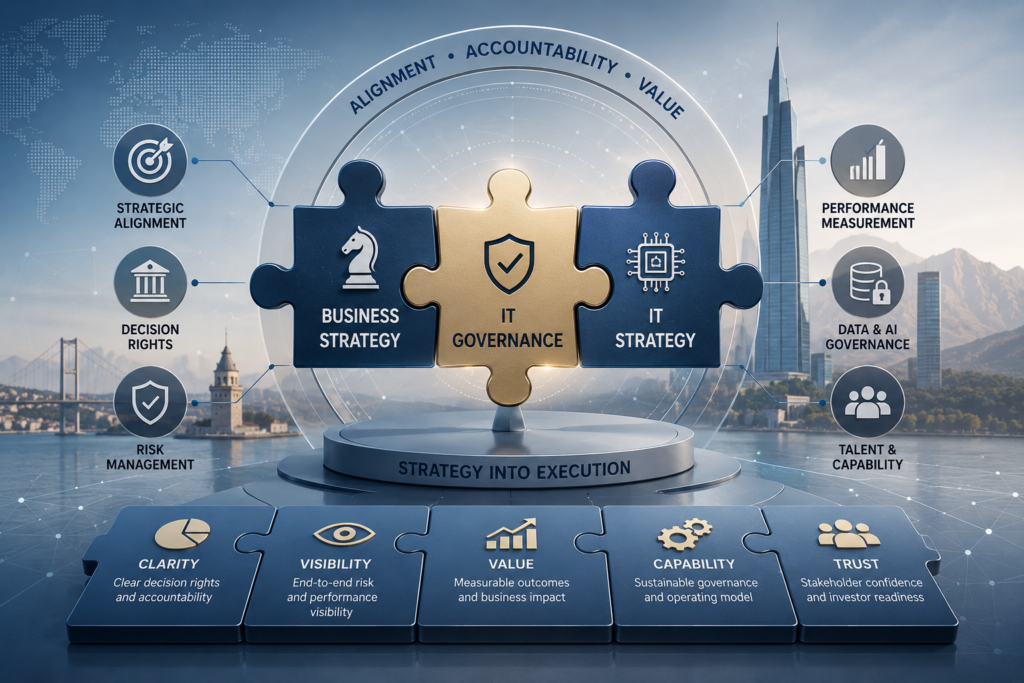
Technology Governance Consulting in Türkiye: Bridging Strategy and Execution

Türkiye sits at a rare intersection. A country with one of the youngest tech-savvy workforces in Europe, deepening ties with Gulf capital markets, and growing ambition in Central Asia. Yet when it comes to technology governance, most organizations are still running on frameworks designed for a different era.

That gap is where the real opportunity lies.

What is technology governance consulting?

Technology governance consulting helps organizations ensure that their IT investments, digital transformation initiatives, and technology decisions are aligned with business strategy, managed with accountability, and delivered with measurable outcomes.

It is not IT support. It is not software implementation. It is the discipline that sits between the boardroom and the server room, translating strategic intent into operational reality.

Why Turkish organizations need it now

Three forces are converging simultaneously.

First, regulatory pressure is intensifying. KVKK compliance, ISO 42001 for AI systems, and alignment with EU frameworks are no longer optional for companies with international exposure. Governance structures that were adequate two years ago are now liabilities.

Second, digital transformation investments are scaling. Turkish enterprises are spending more on cloud, AI, and digital infrastructure than ever before. Without governance frameworks, these investments generate complexity faster than they generate value.

Third, international capital is paying attention. GCC investors, European partners, and multilateral institutions increasingly require evidence of technology governance maturity before committing capital or entering partnerships. The question is no longer "do you have a digital strategy?" It is "how do you govern it?"

What good technology governance consulting delivers

A credible technology governance engagement produces four outcomes.

Clarity on decision rights: who decides what, at what level, with what accountability. Without this, digital transformation becomes a political battleground rather than a strategic journey.

Risk visibility: understanding where technology creates exposure, whether through data handling, vendor dependency, system fragility, or AI decision-making. Governance without risk intelligence is governance on paper only.

Performance measurement: linking technology investments to business outcomes through meaningful metrics, not vanity dashboards.

Institutional capability: building the internal muscle to sustain governance beyond the consulting engagement. The goal is not dependency. It is independence.

The emerging markets dimension

Technology governance consulting in Türkiye carries a dimension that Western frameworks often miss: the emerging markets context.

Organizations here operate across multiple regulatory environments simultaneously. They manage relationships with state institutions that have different expectations than private sector partners. They navigate talent markets where governance expertise is scarce. They run transformation programs with tighter timelines and leaner teams than their counterparts in Western Europe.

This context requires consulting that is adaptive, not prescriptive. Frameworks that work in Frankfurt do not always translate to Istanbul, Baku, or Riyadh without significant calibration.

ITGT Consultancy: technology governance for emerging markets

ITGT Consultancy was built specifically for this context. Our work spans Türkiye, the GCC, and Central Asia; geographies where the demand for rigorous technology governance is growing faster than the supply of practitioners who understand local operating conditions.

We bring international frameworks. We apply local judgment. We deliver measurable outcomes.

If your organization is navigating digital transformation, regulatory alignment, or technology risk in emerging markets, we should talk.

Where does your organization stand on AI governance?Kurumunuz YZ yönetişiminde nerede duruyor?

Twenty questions, ten minutes, and a board‑ready executive summary.Yirmi soru, on dakika ve kurula sunulabilir bir yönetici özeti.

Start the free DiagnosticÜcretsiz Analizi Başlatın
InsightsBlog

Ideas for leaders navigating technology complexityTeknoloji karmaşıklığında yol alan liderler için fikirler

AI GovernanceYZ Yönetişimi

ITIL v5 and AI Governance: Why the New Whitepaper Belongs on Every Board TableITIL v5 ve Yapay Zeka Yönetişimi: Yeni Whitepaper Neden Her Kurulun Masasında Olmalı?

Responsibility can be delegated; accountability cannot. The risk-register test and five questions for the board.Sorumluluk devredilebilir, hesap verebilirlik devredilemez. Risk kaydı testi ve kurul masası için beş soru.

July 2026Temmuz 2026
Read insight →Yazıyı okuyun →
PerspectivePerspektif

Technology Governance Consulting in Türkiye: Bridging Strategy and Execution

Why regulatory pressure, scaling investment and international capital make governance the question of the moment.Regülasyon baskısı, büyüyen yatırım ve uluslararası sermaye yönetişimi neden günün sorusu yapıyor?

June 2026Haziran 2026
Read insight →Yazıyı okuyun →
RegulationRegülasyon

Five AI Governance Questions for Turkish Companies Before COP31COP31 Öncesi Türk Şirketlerine 5 YZ Yönetişim Sorusu

ESG models, emissions data and AI accountability: what regulators and investors will ask in Antalya.ESG modelleri, emisyon verisi ve YZ hesap verebilirliği: Antalya'da düzenleyiciler ne soracak?

June 2026Haziran 2026
Read insight →Yazıyı okuyun →
MaturityOlgunluk

How Do You Measure AI Maturity? How Do You Build the Roadmap?Yapay Zeka Olgunluğunu Nasıl Ölçersiniz? Yol Haritası Nasıl Kurulur?

Twenty control families, the adoption curve, and three prioritization questions for an emerging-markets roadmap.Yirmi kontrol ailesi, benimseme eğrisi ve yol haritasının üç önceliklendirme sorusu.

June 2026Haziran 2026
Read insight →Yazıyı okuyun →